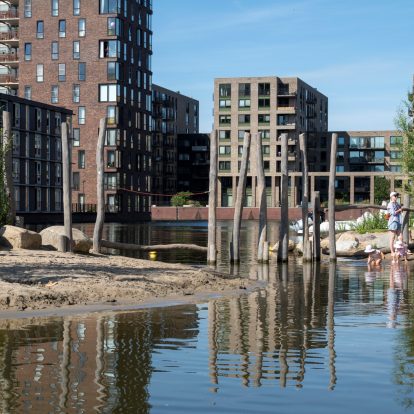
Nature is Circular
The Ecological Principle
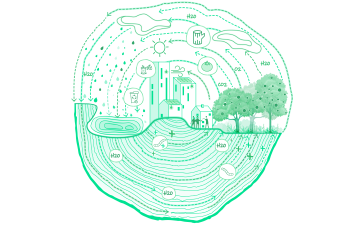
In natural systems, nothing is wasted. Water, nutrients, and materials circulate continuously through soil, vegetation, organisms, and atmosphere. What enters a system is transformed, redistributed, and reused. Decay generates fertility. Runoff recharges groundwater. Death feeds new growth. These are the mechanisms through which ecosystems remain productive over long timescales.
Why It Matters for Cities
Urban systems operate on a different logic: extraction, use, and disposal. Materials are imported, consumed, and discarded. Water is channelled away rather than retained. Soil is treated as a medium for construction, not a living system. This linearity is expensive, ecologically depleting, and increasingly incompatible with climate adaptation goals.
Circular design closes these loops. It treats soil as a living system, water as a resource to retain, and materials as stock to keep in circulation — reducing dependency on external supply chains, strengthening local resource systems, and building environments that regenerate.

How Felixx Applies It
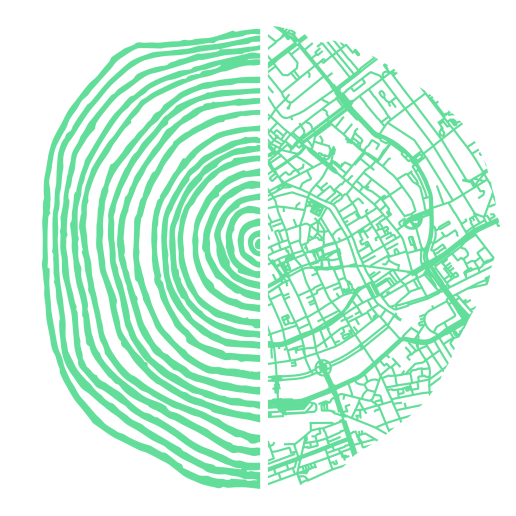
We begin every project by mapping local material, water, and soil systems. What is available on site or nearby? What flows can be retained, redirected, or reused? What residual materials can re-enter the system rather than leave it?
This is a design logic. Circular systems are more efficient, easier to maintain, and more deeply rooted in their local context. They age better and perform more consistently over time.
"Circularity is how nature already works. It's our starting point."
In Nature
The common earthworm (Lumbricus terrestris) decomposes organic material, aerates soil, and cycles nutrients – underpinning entire food webs through closed-loop soil processes. The leafcutter ant (Atta spp.) harvests leaves to grow fungus: waste transformed into food, a working model of circular resource use. Every output is an input. Everything re-enters. That is the standard.