Nature is Adaptive
The ecological principle
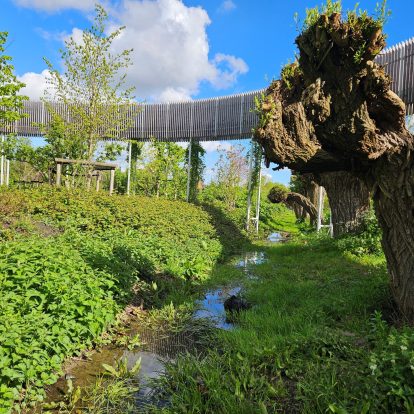
Natural systems are always in motion. They evolve continuously in response to changing conditions – shifts in water, soil, climate, disturbance, and biological composition. Resilience in natural systems comes from the capacity to adjust, transform, and recover. Ecosystems that try to remain fixed become increasingly fragile over time. Those that can evolve persist.

Why it matters for cities
Static design – fixed forms, fixed programmes, fixed technical solutions – concentrates risk. Urban systems designed for specific conditions become liabilities when those conditions change. The increasing frequency of climate extremes, the unpredictability of future growth patterns, and the limitations of long-term data make adaptability an operational requirement.
Designing for adaptation means accepting uncertainty as the first design condition.

How Felixx applies it
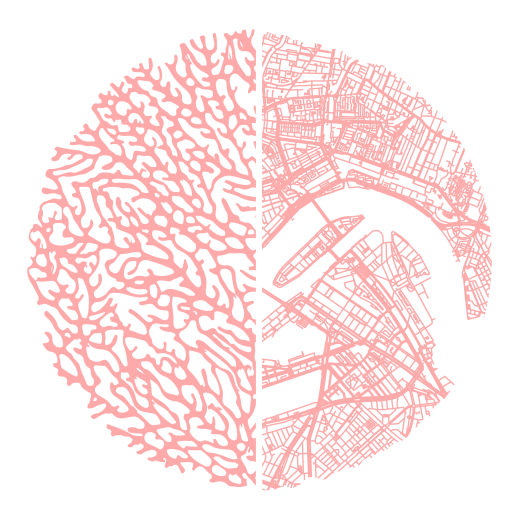
We design opening conditions rather than final states. Spatial frameworks are structured to accommodate change – in climate, in use, in ecological succession. Where data is incomplete or long-term trajectories are uncertain, we design with flexibility built in: phased implementation, adaptive typologies, and systems that can absorb stress events and recover.
Adaptation also means combining scientific data with local knowledge, contextual observation, and experience. Particularly in regions where formal environmental data is limited, this combination is the most robust form of design intelligence available.
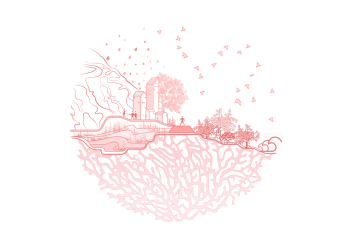
"Adaptation is not about designing for the worst case. It's about designing for change itself."
In Nature
Mangroves (Rhizophora spp.) adapt to tidal flooding through aerial root systems that stabilise coastlines, shelter juvenile fish, and buffer storm energy – performing under conditions that would destroy fixed infrastructure. They are structured around the tide. Sea buckthorn (Hippophae rhamnoides) tolerates poor soils, cold, and drought while fixing nitrogen and preventing erosion: resilience through functional flexibility.